
My Gripes With The Artist’s way
What Is it?
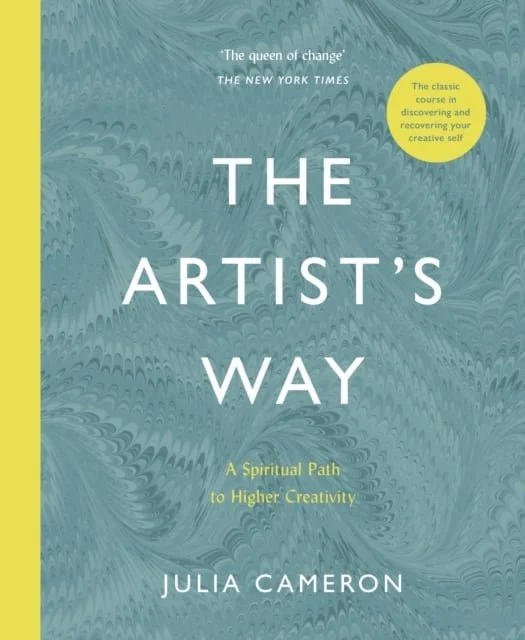
The Artist’s Way by Julia Cameron is self-described as ‘A Course In Discovering Your Creative Self’ that puts the reader through a 12-week course. It was first published in the UK in 1994 but was published in the USA in 1992, making it pretty damn old. It has gone through a few editions but there are very few changes to the actual contents of the course in later editions.
This book goes through a resurgence regularly and for quite a few good reasons. Many people have stated that this book cured their artist block or helped them start a creative pursuit they’d always denied themselves. It acts as a starting point for working out your desires and unpacking your fears.
I’ve undertaken the artist’s way twice myself, which would make you think I’d be a big advocate for it. I’m on the fence in all honesty, and part of taking it on the second time was motivated by an urge to fully unpick my thoughts. I can’t lie the artist way did help change how I show up for myself as an artist and there are parts I still implement to this day. However, I can’t look past some of the glaring issues within Julia’s approach and her blind spots.
I’m hardly the first person to point out some of these issues but I wanted to throw my hat into the ring regardless. In a world that pushes self-improvement as a cure for larger societal issues we should be critical of self-help guides in all forms. Self-improvement is important but can’t fix wider world/soceital issues and can also find us falling into the trap of fitting into a system rather than improving or dismantling it.
My Issues
At the start of the book Julia very clearly states you don’t need to believe in God to do the artists way. She and I quote, says, “Remind yourself that to succeed in this course, no god concept is necessary. In fact, many of our commonly held God concepts get in the way. Do not allow semantics to become one more block for you ” (Cameron, 1993). She goes on to suggest you shouldn’t force yourself to think of God if you are an atheist, to call what she is talking about in another name. The universe is given as an alterative option, a popular one I’m sure. Julia stresses you shouldn’t force yourself to believe if you don’t.
This all sounds good until you realize how much of her writing relies on you believing in a being/person/creature that has designed the universe. Many passages of this book only hold weight or helpful advice if you believe in intelligent design, that something with a plan or thoughts created our world. That there is something greater than us watching. There is no room in this book for a universe of chaos, of one that has no grand design but simply is an array of coincidences. Which means that some of the fears and struggles that come with that world view are just gently pushed to the side, with Julia telling you to simply have faith.
It’s not uncommon for this to be a point of contention between people who are religious/spiritual and those of us who aren’t, not just with this book but in daily life. To discuss how the world works, why it exist as it does, can be a point of conflict for many reasons. While someone may find great comfort in a God, a universe, or something similar that wants them to succeed it doesn’t offer comfort to someone who doesn’t hold that faith. This can cause tension when we talk about how to heal and survive in what can be a cruel world. I can’t speak for everyone, but I don’t believe the world is out to get me or make my life harder but I also don’t believe there is anything trying to help me either. I believe other people are inherently kind and what we put out often comes back to us, but that is people and creatures. Not an all-powerful being. that trying your best doesn’t always give you what you want.
I don’t think there is anything wrong in taking comfort in a grand design, I think if you do hold such faith you’ll find her book easier to work with it. While it seems clear to me that she’s talking about a more Christian idea of God at her core she does leave room for alternatives, encourages it even. It’s just simply a lie when she states you can replace every mention of God for some alterative, especially as an atheist. Julia doesn’t seem to be able to understand a world view without this faith which makes huge chunks of her writing inaccessible for people like me.
Going hand in hand with this issue is how faith (with some hard work) is shown to be a cure all. This isn’t to say she thinks pure belief gets your work into a gallery, she states often you have to do the foot work, but that your success is given to you based on your belief in the world working in your favor. This workbook doesn’t take into account the very real barriers that come from class, gender, race, disability, sexuality etc. I think it does a fantastic job at encouraging the reader to throw themselves out there, to be open to opportunity, and learning how to have faith in yourself. Which is invaluable. The answer will always be no if you never try. This doesn’t change the fact that it’s often written as if these barriers are self-imposed or can be by passed with enough belief alongside some putting in a bit of elbow grease.
It feels almost insensitive to me when reading it at times. I’ve seen truly amazing creatives be denied opportunities because of the color of their skin, the person they love, and the way they present themselves just to name a few. People who have been denied success even after saying yes to every opportunity, pushing there way into rooms to talk to the right person, and having such amazing skills I couldn’t fathom saying no to them myself. Yet they have been denied success. Sometimes the no genuinely comes from discrimination. We live in an unfair system that needs certain groups to be seen as second class citizens or the enemy. As such it is a very real and common experience for hard work to not be enough.
Not only that but some people genuinely can’t put the time, money, or resources into pursuing art. Poverty can be a huge barrier. It stops your access to the arts as you grow up, I mean just look at how many secondary schools in the UK have cut back funding for creative subjects. This puts you at a disadvantage from the start, you don’t gain the culture or language of the arts that is incredibly helpful for success at higher education levels. Then many opportunities in the arts come unpaid, poorly paid, or even expect you to pay for the honor. It’s just not doable for most working-class people, or only doable in very small amounts.
I feel reading the book it’s obvious that Julia is white, well off, and highly educated. She studied at Georgetown University and Fordham university, both of which are Jesuit universities. Not just that but these Universities have produced many U.S. Senators, cardinals of the Catholic church, governors, and apparently even had a few billionaires pass through. It makes sense learning more about her as an individual why her writing has these blind spots. Despite being a woman, which I’m sure has put very real barriers in her life, she comes from an incredibly privileged position.
I wonder how many of the extracts in her book of success stories come from people of similar backgrounds to herself. How many of these people were poor, disabled, part of the global majority, or queer? She doesn’t always give you this information, all she tells you is a tiny bit about the struggle and how her suggestions helped them overcome it. It makes sense she wouldn’t put failures in the book but I do wonder what she left out or who she doesn’t often work with.
What Do I Like?
This doesn’t mean I think the whole book is useless, I think her scatter gun approach means you’ll certainly find something helpful within the pages. I do think some of the exercises maybe best done with a therapist depending on your own background, some of this work could take you back to some quite vulnerable spaces. Some of which maybe be best done with the assistance of a professional.
What I do like is how she encourages you to show up for your little inner artist. She really leans into how artists can’t create anything without first playing. Which I agree with my whole heart. Play seems frivolous but it helps you learn new techniques, refills your energy, creates a sense of whimsy and ultimately gives you the inspiration to create more.
I think it’s best to talk about some of the exercises in the book to best demonstrate what I do enjoy about the Artist’s Way. Some of my personal favorites include:
Select and write out one happy piece of encouragement. This could be from a friend, mentor, stranger, or really anyone. It just has to make you feel good. Then place it somewhere you can see. The one I’ve had up in my room for years is from my mother. I was talking to her about how I finally felt like I was a talented artist and her response, completely earnestly, was, ‘of course you are’. It was said with such conviction I always think back on it when I doubt myself. It’s a reminder of my abilities.
List Five Imaginary Lives, is an exercise you get asked to do a few times throughout the course. You write down something you could have been, a painter, an actor, a judge, a diver, etc. Literally anything you’ve dreamed of being or doing in the past. Then you try to work out some way you could live this alternative life in a small way. An example would be if you’d dreamed of being an author, you could either writing a new or finish up a short story to publish in a zine. It’s not to take on that life fully but to allow yourself to access a part of you that may have been left gathering dust.
List Twenty Things You Enjoy Doing, put the date you last did them (a rough estimate will do). It shocked me the first time I did this how long it had been since I’d indulged in some of my favorite hobbies. Julia encourages you to put aside time to do some of these activities and so I do I. It helped me reevaluate my time.
Go Out And Pick Five Leaves, Flowers, And Rocks. I love this one, it’s simple and easy to work into your week. It makes you pay more attention to the world around you, take a moment to slow down and really observe your environment. Rocks are particularly great because you can keep one in your pocket to fiddle with!
This is just a small list of activities I enjoyed and found personally useful, even if a bit silly. I’m sure it would be different for everyone. The main take away from this list is how important it is to take time to refill the tank and to show up for yourself. It’ll look different for everyone and I don’t think the artist way is necessary to learn how to.
I couldn’t recommend the artist way with my whole heart but I also couldn’t say it’s total trash either. There are an awful lot you can find second hand, so if you’re curious it’s not hard to find a cheap copy to work through.